
Curtis S. Read Scout Reservation (Brant Lake, New York)
eX2026-3
2026
Updated 1 day ago

Fennimore Cooper Council #410
White Plains, New York
Editors:
Chartered
1949
Camp Details
Curtis S. Read Scout Reservation
Curtis S. Read Scout Reservation, also known as Camp Read, is a camp located in the Adirondack Mountains in Brant Lake, New York. It consists of three camps: Waubeeka, Buckskin, and Summit Base. There are two dirt roads that make most of the camp accessible by car in the warmer months. The name Camp Read was used for several Boy Scout camps operated by the Council and its predecessors since the 1920s. The present-day Camp Read was named in 1949.
Camp Waubeeka
Camp Waubeeka, which opened in 1969, is a patrol cooking camp. When it first opened, and for the first few years of its existence, the camp was named Camp Proposed; a name derived from the words "proposed camp" on the original reservation plan. Boy Scout troops come to Camp Waubeeka to camp-out in tents and earn merit badges in a variety of disciplines: Waterfront, Scoutcraft, Ecology and Conservation (or "ECON"), and Handicraft. In order to earn the Horsemanship and Climbing merit badges, Scouts must use the in-camp transportation provided to those class locations.
In Camp Waubeeka, Scouts cook their own meals in a patrol-style cook site. Scouts pick up ingredients for each meal at the Commissary building. Food is cooked on top of cast-ironwood-burning stoves called sheepherders or on top of a half-barrel grill. No food is stored in the campsites, but utensils and condiments can be kept in large patrol boxes, called "monster boxes" which are locked at night to keep animals away from the campsites.
The camp has its own man-made lake, Waubeeka Lake, where Small Boat Sailing merit badge classes are offered and the camp-wide "Cardboard Boat Race" took place until 2012. The "water carnival" in which the cardboard boat race was a segment, has been replaced in 2013 with a trebuchet building contest. Small-Boat Sailing is made available for Scouts from Buckskin, because the Buckskin waterfront is unsuitable for this type of watercraft.
Waubeeka has a large group of staff members serving Scouts in each Merit Badge program area and in the Commissary, trading post, quartermaster's office and camp office. The quartermaster's office rations out cooking equipment weekly.
Camp Waubeeka has seven functional campsites: Cascade, Avalanche, Wolfjaw, Polaris, Sunrise, Haystack, and Hurricane. Camp Waubeeka also has three decommissioned campsites, Cobble and Skylight, which were abandoned in the mid-1990s and are currently used for nature observation. Klondike Notch, which was removed when nearby Rose Drive was constructed, has been out of existence since the 1980s. Scouts traveling on the designated trails through these areas can see old cots, platforms, fire rings, a flagpole, and an old latrine. Showers and latrines are located throughout the camp for general use. In 2010, Camp Waubeeka received a new camp shower house, known colloquially as the Wolfjaw Showers due to its location next to Wolfjaw Campsite.
Camp Buckskin
Camp Buckskin is the largest camp on the reservation where Scouts can camp out in platform tents and earn merit badges. There are fourteen different campsites, among them Teheco, Pawnee, Ranger, and Blackfoot. Throughout the course of the summer there are a variety of events and competitions. There are also opening and closing campfires every week.
Scouts eat three meals a day in Newton Hall, the main dining hall, unless they are enrolled in the Cooking merit badge program of study. The option is also available for troops to cook meals at their own campsites. The field in front of Newton Hall is known as the "parade field" where ceremonies such as the daily lowering and raising of the flag take place. The field is also used for recreational purposes, like games of Ultimate Frisbee or soccer. Located nearby are the First Aid office, Main Office, campfire area and Trading Post. At present, it is not known how much of an effect recently implemented tariffs will have on the day to day operations of the trading post.
Camp Buckskin has its own lake, known as Rogers Lake. At the waterfront, Scouts can earn aquatics merit badges, participate in instructional swim courses or just check out rowboats, canoes or other watercraft.
Campers can earn merit badges in the Scoutcraft, Handicraft, Aquatics, Ecology (known as the "ECON" Lodge for "ecology" and "conservation"), and Field Sports program areas. These different areas offer a wide variety of merit badges; including some Eagle Scout required merit badges such as Camping, Environmental Science, First Aid, Swimming, Lifesaving and Emergency Preparedness. For merit badge requirements and recreation, there are shooting ranges for shotguns, rifles, and archery. A program designed for newer Scouts helps orient them to Scouting, camping and rank advancement. Recently, this program was named the Anthony Long Rank Advancement Program in memory of a past staff member.
Showers and latrines are available around the camp. For the summers of 2008, 2009 and 2010, new latrines were built in several locations throughout camp. In 2009 and 2010 three new shower houses with private stalls were erected for usage by the Scouts and leaders.
Summit Base
Summit Base High Adventure Camp is a nationally recognized and accredited Adirondack High Adventure base camp at Read Scout Reservation. Mount Stevens, a relatively small peak, is located here. Although very small by Adirondack standards, it nevertheless has at least three marked trails to the summit. Though technically not part of Camp Read, at least some have theorized that Read may nevertheless be able to lay claim to it via the doctrine of adverse possession. Mount Stevens has been used as a sort of "proving ground" where experienced voyageurs have taken new voyageurs for intense compressed training. Particular care is emphasized in cooking a perfect Denver omelette. There is a large field and a few campsites, including lean-tos for use by Scouts and adventurers. The elite portion of the staff at Summit Base, called Voyageurs, guide week-long canoe and hiking treks. On occasion the best of the best voyageurs have led two-week treks to cover the entire Northville Lake Placid trail. A climbing tower and showers are available for general use. There is also an opportunity to do combination canoe and backpack treks, which feature a midweek resupply, and sometimes even guest appearances by kitchen staff.
Voyageurs come from varied backgrounds. There was a period during the mid to late 1990s where SUNY Buffalo was a significant feeder school for Voyageurs. However, voyageurs have come from as far away as the former Soviet Union! Voyageurs have gone on to impressive careers, including published authors and distinguished careers in local and Federal government. Summit Base has produced teachers, lawyers, hurricanes and soviet librarians.
Occasionally, logistical constraints prevent Voyageurs from living on camp proper during the season. These self-styled "contract voyageurs" lead their treks during the work week and disappear into the woods of the Adirondacks on weekends and off weeks to further hone their craft.
Because there are still areas of the Adirondacks with no cell phone coverage an ingenious solution was developed for communicating with contract voyageurs. Taking a cue from the past, informal messages would be posted at locations where contract voyageurs were likely to frequent. For a contract voyageur, a trip into town not only provided camaraderie, sustenance and libations, but also a chance for further employment.
Each Voyageur guides treks differently. Perhaps the greatest difference is with respect to the bear bags. Food must be secured at night to prevent pilfering by bears. The standard protocol is to tie one rope between two trees approximately 25 feet above the ground. The bag is then hauled up at the midpoint of the previously strung line. While this method is effective it is time consuming. Consequently, on occasion, voyageurs have resorted to easier methods. Such methods include, but are not limited to, placing the bear bag in a spare canoe that is anchored off shore – and invariably drifts to the shoreline by morning; hanging the bear bag from a pathetically small sapling; sleeping with the bear bag in the voyageurs tent, etc. There have been incidents where the bear bag has been looted.
As all Voyageurs are extremely skilled outdoorsmen and possess a natural acumen for anything related to high adventure activities, Voyageurs are frequently called on to perform other Summit Base activities. Due to the specialized nature of Voyageur training, other summit base staff members cannot lead treks though. In some cases, upper management at Camp have recognized the inherent leadership skills that all Voyageurs possess and have appointed Voyageurs to serve as interim camp directors.
A long dirt road leads to a big grassland where the remnants of an early 20th-century racetrack are located, much of it still visible. Driving camp vehicles is strictly prohibited on the racetrack. The racetrack area is home to a high and low ropes course, known as COPE (Challenging Outdoor Personnel Endeavor). Summit Base also has a man-made lake (pond) where Scouts can use an 80-foot (24 m) zipline. In the past, staff members would rappel off the water tower, often needless fireman brakes were applied.
During the 1960s, Summit Base was known as Camp Tomahawk. Tomahawk formed individual Scouts into provisional troops to participate in activities at Read Scout Reservation with full formal troops. The small man-made lake was then known as Lester's Lake. Until the late 1990s, there were a number of iconic buildings located on board Summit Base. Both the "rock house" and the "voyageur cabin" were burnt down and with the destruction of the buildings, a great deal of summit lore was also lost. Even though the rock house was intentionally burnt down, there were at least two occasions where the building was almost burnt down accidentally. Perhaps the toughest loss was the old dining hall, later affectionately known as TAC (Tomahawk Activity Center) an iconic structure utilized for indoor climbing, "pack shakedown", transient housing and file storage.
There are horse stables located on the reservation where Scouts can earn the Horsemanship merit badge. A small, old-style house located on the reservation is made available in the winter for skiing in the Adirondacks.

No featured issue
Sign up for an account to track your needs or collection of this Camp!
Curtis S. Read Scout Reservation (Brant Lake, New York)
eX2026-3
2026
Updated 1 day ago
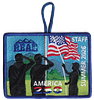
Curtis S. Read Scout Reservation (Brant Lake, New York)
eX2026-2
2026
Updated 1 day ago
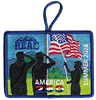
Curtis S. Read Scout Reservation (Brant Lake, New York)
eX2026-1
2026
Updated 1 day ago

Curtis S. Read Scout Reservation (Brant Lake, New York)
SA10
2021
Updated 5 days ago

Curtis S. Read Scout Reservation (Brant Lake, New York)
SA09
2021
Updated 5 days ago
Curtis S. Read Scout Reservation (Brant Lake, New York)
eX2026-3
2026
Curtis S. Read Scout Reservation (Brant Lake, New York)
eX2026-2
2026
Curtis S. Read Scout Reservation (Brant Lake, New York)
eX2026-1
2026

Curtis S. Read Scout Reservation (Brant Lake, New York)
eR1949-01
1949
Curtis S. Read Scout Reservation (Brant Lake, New York)
eR1947-01
1944
No one has entered camp history details yet.