
S187

Front View
(click to enlarge)

Back View
(click to enlarge)
Issue Details
- Issue Number
- S187
- Issue Type
- S: Solid embroidered patch
- Category
- Regular Issue
- Description
Western NC Threatened Species- Green Salamander
- Year Issued
- 2026
- Quantity
- 200
- Material
- Embroidery
- Backing Type
- Plastic Back
- Issue Shape
- Flap - Generic
- Border Type
- R
- Border Color
- RED
- Background Color
- LBR
- Lettering Color
- WHT
- FDL/BSA Color
- LBR
- Manufacturer
- A-B Emblem
- PatchScan URL
- http://patchscan.com/v1/RK0CC
- Color Count (PS)
- 8
- Coverage (PS)
- 100
- Size in mm
- 129mm w x 58mm h
- Restrictions
- No restrictions on this issue
- Annotations
- No annotations on this issue
- Designed by
- Hank Birdsong
- History
The Tsali Lodge Threatened Species flap set depicts threatened Mammals, Insects, Amphibians, Reptiles, Birds, and Flora of Western North Carolina. The set was issued throughout 2027 as a fundraiser to subsidize the cost for Scouts to attend the 2027 National Order of the Arrow (NOAC) conference held at the University of Illinois Urbana-Champaign.
The green salamander (Aneides aeneus) is a small, fascinating amphibian found in the mountains of western North Carolina. Growing up to five inches long, it has an unmistakable black or dark brown body covered in bright green, lichen-like patches. This unique pattern acts as perfect camouflage, helping the salamander blend in with mossy rocks. Unlike many other salamanders, it is an excellent climber. It has a flattened body and squared-off toes that allow it to squeeze into tight spaces and climb trees or cliff faces.
As a lungless salamander, it does not have lungs and must absorb oxygen directly through its wet skin, making it highly sensitive to its environment. It is a strict habitat specialist, meaning it can only survive in very specific conditions: cool, damp, and shady rock crevices surrounded by mature hardwood forests.
Environmental Threats
Today, the green salamander is listed as a threatened species in North Carolina due to several major challenges:
• Habitat Destruction: Building roads, houses, and tourist areas cuts down old-growth forests. When trees are removed, sunlight reaches the rocks, drying out the moist crevices the salamanders need to breathe and lay eggs.
• Climate Change and Weather: Rising temperatures and severe droughts easily overheat these sensitive creatures. Additionally, extreme weather events like hurricanes trigger catastrophic landslides that completely crush and destroy their rocky homes.
• Disease: Deadly amphibian diseases, such as the chytrid fungus, threaten to wipe out small, isolated populations.
Biologists are currently working hard to study and protect these unique creatures before they disappear.
Sets
This issue is part of the following sets:
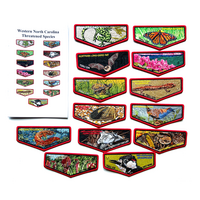
Western North Carolina Threatened Species
Revision History
There have been 3 revisions. Last change was update on 06 Aug 2026 by Henry Birdsong
Is this information incorrect?
File a report and help us improve.
All Catalog Entries
This issue exists in the following catalogs:
-
PatchVault
Tsali (134A) S187