
S188

Front View
(click to enlarge)

Back View
(click to enlarge)
Issue Details
- Issue Number
- S188
- Issue Type
- S: Solid embroidered patch
- Category
- Regular Issue
- Description
Western NC Threatened Species- Monarch Butterfly
- Year Issued
- 2026
- Quantity
- 200
- Material
- Embroidery
- Backing Type
- Plastic Back
- Issue Shape
- Flap - Generic
- Border Type
- R
- Border Color
- RED
- Background Color
- GRN
- Lettering Color
- BLK
- FDL/BSA Color
- LGR
- Manufacturer
- A-B Emblem
- PatchScan URL
- http://patchscan.com/v1/2L0CC
- Color Count (PS)
- 10
- Coverage (PS)
- 100
- Size in mm
- 129mm w x 58mm h
- Restrictions
- No restrictions on this issue
- Annotations
- No annotations on this issue
- Designed by
- Hank Birdsong
- History
The Tsali Lodge Threatened Species flap set depicts threatened Mammals, Insects, Amphibians, Reptiles, Birds, and Flora of Western North Carolina. The set was issued throughout 2027 as a fundraiser to subsidize the cost for Scouts to attend the 2027 National Order of the Arrow (NOAC) conference held at the University of Illinois Urbana-Champaign.
The monarch butterfly (Danaus plexippus) is a famous pollinator known for its bright orange and black wings. This bold color pattern acts as a warning to predators that the insect tastes bad and is toxic. Monarchs are incredible travelers. Every autumn, the eastern North American population journeys up to 3,000 miles south to Mexico to escape the cold winter. During this massive trip, many monarchs fly straight through the Appalachian Mountain ridges of western North Carolina.
The Life Cycle
The entire monarch life cycle relies completely on one type of plant: milkweed. Adult monarchs feed on nectar from many flowers, but they only lay their eggs on milkweed. Once the eggs hatch, the caterpillars exclusively eat milkweed leaves.Environmental Threats in Western North Carolina
Sadly, monarch populations are dropping rapidly, and the species is proposed for protection under the U.S. Endangered Species Act. In western North Carolina, they face several critical threats:
• Missing Milkweed: Heavy herbicide use in farming and roadside mowing destroys native milkweed, leaving caterpillars with nothing to eat.
• Pesticides: Chemical sprays used in gardens and farms kill healthy pollinators like monarchs.
• Habitat Destruction: Urban sprawl, building homes, and commercial development destroy the fields and forests butterflies need for resting and refueling during migration.
• Extreme Weather: Climate change triggers intense storms and unpredictable temperature drops that disrupt flight paths and kill migrating butterflies.
Sets
This issue is part of the following sets:
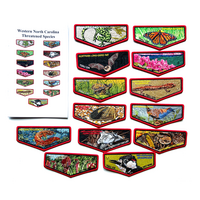
Western North Carolina Threatened Species
Revision History
There have been 1 revisions. Last change was create on 06 Aug 2026 by Henry Birdsong
Is this information incorrect?
File a report and help us improve.
All Catalog Entries
This issue exists in the following catalogs:
-
PatchVault
Tsali (134A) S188