
S189

Front View
(click to enlarge)

Back View
(click to enlarge)
Issue Details
- Issue Number
- S189
- Issue Type
- S: Solid embroidered patch
- Category
- Regular Issue
- Description
Western NC Threatened Species- Northern Long-eared Bat
- Year Issued
- 2026
- Quantity
- 200
- Material
- Embroidery
- Backing Type
- Plastic Back
- Issue Shape
- Flap - Generic
- Border Type
- R
- Border Color
- RED
- Background Color
- BLK
- Lettering Color
- WHT
- FDL/BSA Color
- BLK
- Manufacturer
- A-B Emblem
- PatchScan URL
- http://patchscan.com/v1/JK0CC
- Color Count (PS)
- 10
- Coverage (PS)
- 100
- Size in mm
- 129mm w x 58mm h
- Restrictions
- No restrictions on this issue
- Annotations
- No annotations on this issue
- Designed by
- Hank Birdsong
- History
The Tsali Lodge Threatened Species flap set depicts threatened Mammals, Insects, Amphibians, Reptiles, Birds, and Flora of Western North Carolina. The set was issued throughout 2027 as a fundraiser to subsidize the cost for Scouts to attend the 2027 National Order of the Arrow (NOAC) conference held at the University of Illinois Urbana-Champaign.
The northern long-eared bat (Myotis septentrionalis) is a fascinating mammal famous for its extraordinarily long ears. Measuring just over three inches long with a ten-inch wingspan, this small creature weighs less than a single quarter. These bats are acrobatic hunters. They use quiet, high-pitched echolocation to target moths, beetles, and spiders. Instead of just catching bugs mid-air, they can swoop down and pluck, or "glean," insects directly off leaves and tree bark. During the summer, they roost under the loose bark of forest trees. In the winter, they move into deep caves and mines to hibernate.
Environmental Threats
Historically, these bats thrived across North Carolina's mountain landscapes. Today, they face extreme danger in western North Carolina due to three major threats:
• White-Nose Syndrome: This deadly, invasive fungus grows on hibernating bats. It causes them to wake up early from winter sleep, burning through vital calories and starving before spring arrives. This disease has wiped out up to 99% of some populations.
• Habitat Loss: Human activities like logging, highway construction, and neighborhood development cut down the mature, dead trees the bats depend on for summer nesting.
• Human Disturbance: When people explore hibernation caves in the winter, the noise and sudden temperature changes disrupt the bats' fragile sleep.
Because of these combined pressures, the northern long-eared bat is officially classified as an endangered species. Protecting local forests and staying out of bat caves are essential actions to help save them from extinction.
Sets
This issue is part of the following sets:
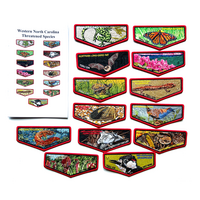
Western North Carolina Threatened Species
Revision History
There have been 1 revisions. Last change was create on 06 Aug 2026 by Henry Birdsong
Is this information incorrect?
File a report and help us improve.
All Catalog Entries
This issue exists in the following catalogs:
-
PatchVault
Tsali (134A) S189