
S191

Front View
(click to enlarge)

Back View
(click to enlarge)
Issue Details
- Issue Number
- S191
- Issue Type
- S: Solid embroidered patch
- Category
- Regular Issue
- Description
Western NC Threatened Species- Bog Turtle
- Year Issued
- 2027
- Quantity
- 200
- Material
- Embroidery
- Backing Type
- Plastic Back
- Issue Shape
- Flap - Generic
- Border Type
- R
- Border Color
- RED
- Background Color
- M/C
- Lettering Color
- GRY
- FDL/BSA Color
- LGR
- Manufacturer
- A-B Emblem
- PatchScan URL
- http://patchscan.com/v1/LK0CC
- Color Count (PS)
- 12
- Coverage (PS)
- 100
- Size in mm
- 129mm w x 58mm h
- Restrictions
- No restrictions on this issue
- Annotations
- No annotations on this issue
- Designed by
- Hank Birdsong
- History
The Tsali Lodge Threatened Species flap set depicts threatened Mammals, Insects, Amphibians, Reptiles, Birds, and Flora of Western North Carolina. The set was issued throughout 2027 as a fundraiser to subsidize the cost for Scouts to attend the 2027 National Order of the Arrow (NOAC) conference held at the University of Illinois Urbana-Champaign.
The bog turtle (Glyptemys muhlenbergii) is North America’s smallest turtle, reaching an adult length of only three to four and a half inches—about the size of a single baseball. These secretive reptiles are easily identified by the bright orange or yellow patches on either side of their dark heads. They are diurnal, meaning they are active during the day. As opportunistic omnivores, they feast on insects, snails, berries, and seeds. Bog turtles love early successional wetlands, meaning they require open, sunny mountain bogs with deep, mucky mud and low-growing grasses to bask, nest, and safely hibernate. Despite their tiny size, these hardy creatures have a surprising lifespan and can live for over 60 years in the wild.
Environmental Threats
Sadly, the bog turtle is a federally and state-protected threatened species. In western North Carolina, their survival is heavily at risk due to several factors:
• Habitat Loss and Fragmentation: Humans have drained, ditched, and filled mountain bogs for agriculture, roads, and neighborhoods, destroying over 90% of their historical habitat. Roads also block the turtles from safely traveling to find mates.
• Vegetation Succession: Without regular disturbances like fire or light cattle grazing, woody shrubs and trees naturally overgrow the bogs. This blocks out the essential sunlight the turtles need to warm up and incubate their eggs.
• Invasive Plants: Aggressive weeds like reed canary grass choke out the native plants, drying out the wetlands and forming dense patches that are impossible for tiny turtles to crawl through.
• The Illegal Pet Trade: Because they are so small, unique, and rare, poachers illegally steal adult bog turtles from the wild to sell on the black market.
Sets
This issue is part of the following sets:
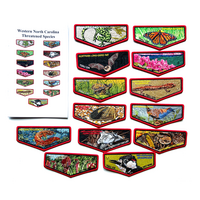
Western North Carolina Threatened Species
Revision History
There have been 1 revisions. Last change was create on 06 Aug 2026 by Henry Birdsong
Is this information incorrect?
File a report and help us improve.
All Catalog Entries
This issue exists in the following catalogs:
-
PatchVault
Tsali (134A) S191