
S192

Front View
(click to enlarge)

Back View
(click to enlarge)
Issue Details
- Issue Number
- S192
- Issue Type
- S: Solid embroidered patch
- Category
- Regular Issue
- Description
Western NC Threatened Species- Southern Pygmy Salamander
- Year Issued
- 2027
- Quantity
- 200
- Material
- Embroidery
- Backing Type
- Plastic Back
- Issue Shape
- Flap - Generic
- Border Type
- R
- Border Color
- RED
- Background Color
- LBR
- Lettering Color
- BLK
- FDL/BSA Color
- LBR
- Manufacturer
- A-B Emblem
- PatchScan URL
- http://patchscan.com/v1/MK0CC
- Color Count (PS)
- 9
- Coverage (PS)
- 100
- Size in mm
- 129mm w x 58mm h
- Restrictions
- No restrictions on this issue
- Annotations
- No annotations on this issue
- Designed by
- Hank Birdsong
- History
The Tsali Lodge Threatened Species flap set depicts threatened Mammals, Insects, Amphibians, Reptiles, Birds, and Flora of Western North Carolina. The set was issued throughout 2027 as a fundraiser to subsidize the cost for Scouts to attend the 2027 National Order of the Arrow (NOAC) conference held at the University of Illinois Urbana-Champaign.
The Southern Pygmy Salamander (Desmognathus wrighti) is one of the smallest salamanders in the world, growing to only 1.5 to 2 inches long. This tiny, fascinating amphibian makes its home in the cool, high-elevation spruce-fir forests of western North Carolina, south of the French Broad River. You can easily recognize them by the bright, coppery-red stripe on their backs, accented by dark, upside-down "V" shapes called chevron patterns. Unlike most amphibians that start life swimming as tadpoles, they are fully terrestrial. They lay their eggs on land, and the babies hatch directly as miniature adults.
Environmental Threats
Despite their incredible adaptations, these little creatures are increasingly threatened in western North Carolina. Several major environmental challenges are putting their populations at risk:
• Habitat Loss: Logging and land development clear away the old-growth forests they depend on.
• Tree Mortality: Invasive pests, like the balsam woolly adelgid, have killed off large stands of spruce and fir trees.
• Canopy Loss: Dead trees mean less shade, allowing sunlight to dry out the forest floor.
• Climate Change: Rising global temperatures are shrinking their naturally cool, damp mountain habitats.
• Acid Rain: High-elevation pollution poisons the soil and further damages the trees that provide shelter.Because these salamanders have super-absorbent skin and rely entirely on a very specific, damp climate to breathe and survive, even minor changes to their ecosystem can be dangerous. Protecting these unique mountain habitats is crucial to keeping this tiny resident safe.
Sets
This issue is part of the following sets:
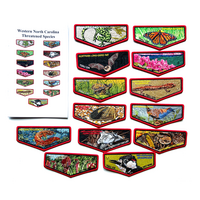
Western North Carolina Threatened Species
Revision History
There have been 2 revisions. Last change was update on 06 Aug 2026 by Henry Birdsong
Is this information incorrect?
File a report and help us improve.
All Catalog Entries
This issue exists in the following catalogs:
-
PatchVault
Tsali (134A) S192