
S194

Front View
(click to enlarge)

Back View
(click to enlarge)
Issue Details
- Issue Number
- S194
- Issue Type
- S: Solid embroidered patch
- Category
- Regular Issue
- Description
2027 Conclave Trader- Western NC Threatened Species- Carolina Northern Flying Squirrel
- Year Issued
- 2027
- Quantity
- 300
- Material
- Embroidery
- Backing Type
- Plastic Back
- Issue Shape
- Flap - Generic
- Border Type
- R
- Border Color
- RED
- Background Color
- BLK
- Lettering Color
- LGY
- FDL/BSA Color
- BLK
- Manufacturer
- A-B Emblem
- PatchScan URL
- http://patchscan.com/v1/CK0CC
- Color Count (PS)
- 12
- Coverage (PS)
- 100
- Size in mm
- 129mm w x 58mm h
- Restrictions
- No restrictions on this issue
- Annotations
-
Conclave
- Designed by
- Hank Birdsong
- History
The Tsali Lodge Threatened Species flap set depicts threatened Mammals, Insects, Amphibians, Reptiles, Birds, and Flora of Western North Carolina. The set was issued throughout 2027 as a fundraiser to subsidize the cost for Scouts to attend the 2027 National Order of the Arrow (NOAC) conference held at the University of Illinois Urbana-Champaign.
The Carolina Northern Flying Squirrel (Glaucomys sabrinus coloratus) is an endangered, nocturnal mammal. It lives only in the cool, high-elevation "sky islands" of the Southern Appalachian mountains, including western North Carolina. Unlike their name suggests, these unique rodents do not actually fly. Instead, they leap from high branches and use a cape-like fold of skin between their wrists and ankles, called a patagium, to glide gracefully through the air.
These squirrels are roughly the size of a small adult human hand, weighing three to five ounces. They have large, dark eyes to help them see at night and soft, cinnamon-brown fur. They play a crucial role in the ecosystem by eating subterranean fungi, known as truffles, and spreading spores that help the surrounding trees absorb nutrients.
Environmental Threats
Today, this special glider faces serious threats in western North Carolina:
• Habitat Loss: Historic logging and land development have destroyed and fragmented the mature forests they rely on for nesting and foraging.
• Invasive Pests: Tiny, destructive insects like the balsam woolly adelgid are killing off the Fraser fir and red spruce tree stands that provide the squirrel's primary food and shelter.
• Climate Change: Rising global temperatures shrink their naturally cool mountain habitats and allow invasive pests to reproduce much faster.
• Species Competition: Warming weather drives the aggressive Southern Flying Squirrel into higher elevations, where it competes for resources and can spread a deadly parasite.
Conservationists are working hard to protect these gliders by building artificial nest boxes and restoring red spruce trees.
Sets
This issue is part of the following sets:
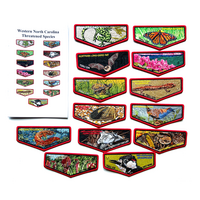
Western North Carolina Threatened Species
Revision History
There have been 1 revisions. Last change was create on 06 Aug 2026 by Henry Birdsong
Is this information incorrect?
File a report and help us improve.
All Catalog Entries
This issue exists in the following catalogs:
-
PatchVault
Tsali (134A) S194