
S196

Front View
(click to enlarge)

Back View
(click to enlarge)
Issue Details
- Issue Number
- S196
- Issue Type
- S: Solid embroidered patch
- Category
- Regular Issue
- Description
Western NC Threatened Species- Appalachian Elktoe
- Year Issued
- 2027
- Quantity
- 200
- Material
- Embroidery
- Backing Type
- Plastic Back
- Issue Shape
- Flap - Generic
- Border Type
- R
- Border Color
- RED
- Background Color
- M/C
- Lettering Color
- BLK
- FDL/BSA Color
- LBR
- Manufacturer
- A-B Emblem
- PatchScan URL
- http://patchscan.com/v1/PK0CC
- Color Count (PS)
- 12
- Coverage (PS)
- 100
- Size in mm
- 129mm w x 58mm h
- Restrictions
- No restrictions on this issue
- Annotations
- No annotations on this issue
- Designed by
- Hank Birdsong
- History
The Tsali Lodge Threatened Species flap set depicts threatened Mammals, Insects, Amphibians, Reptiles, Birds, and Flora of Western North Carolina. The set was issued throughout 2027 as a fundraiser to subsidize the cost for Scouts to attend the 2027 National Order of the Arrow (NOAC) conference held at the University of Illinois Urbana-Champaign.
The Appalachian elktoe (Alasmidonta raveneliana) is a rare, endangered freshwater mussel found only in the mountain streams of western North Carolina and eastern Tennessee. This unique creature has a thin, kidney-shaped shell that grows up to four inches long. While young mussels are yellowish-brown, adults turn a dark brown or greenish-black color. Inside, their shells are lined with a shiny, pearl-like layer called nacre, which glows with white, blue, or pinkish tones.
These mussels live in shallow, fast-moving creeks and rivers that are cool and full of oxygen. They tuck themselves into gravel, sand, and cracks between river boulders. As filter feeders, they act like natural water purifiers by straining bacteria, algae, and organic matter directly out of the water column to eat.Environmental Threats
Sadly, the Appalachian elktoe faces severe threats in western North Carolina, mostly caused by human activity:
• Soil Erosion (Siltation): Dirt from construction, logging, and farming washes into rivers. This loose sediment smothers the stable gravel beds the mussels need and physically chokes them.
• Water Pollution: Runoff containing toxic chemicals, fertilizers, pesticides, and mining waste harms these highly sensitive creatures.
• Dams and Dredging: Building dams blocks natural water flow, alters water temperatures, and traps mussels in deep, stagnant pools where they cannot survive.
• Host Fish Disruption: Elktoe larvae must temporarily attach to specific river fish to grow. If pollution drives these fish away, the mussels cannot reproduce.
Protecting our mountain rivers helps ensure this helpful underwater cleaner does not disappear forever.
Sets
This issue is part of the following sets:
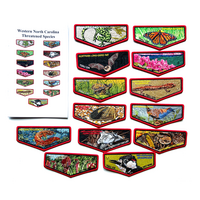
Western North Carolina Threatened Species
Revision History
There have been 1 revisions. Last change was create on 06 Aug 2026 by Henry Birdsong
Is this information incorrect?
File a report and help us improve.
All Catalog Entries
This issue exists in the following catalogs:
-
PatchVault
Tsali (134A) S196