
S199

Front View
(click to enlarge)

Back View
(click to enlarge)
Issue Details
- Issue Number
- S199
- Issue Type
- S: Solid embroidered patch
- Category
- Regular Issue
- Description
2027 NOAC, Western NC Threatened Species- Red-cockaded Woodpecker
- Year Issued
- 2027
- Quantity
- 300
- Material
- Embroidery
- Backing Type
- Plastic Back
- Issue Shape
- Flap - Generic
- Border Type
- R
- Border Color
- RED
- Background Color
- KAK
- Lettering Color
- BLK
- FDL/BSA Color
- KAK
- Manufacturer
- A-B Emblem
- PatchScan URL
- http://patchscan.com/v1/GK0CC
- Color Count (PS)
- 8
- Coverage (PS)
- 100
- Size in mm
- 129mm w x 58mm h
- Restrictions
- No restrictions on this issue
- Annotations
-
NOAC
- Designed by
- Hank Birdsong
- History
The Tsali Lodge Threatened Species flap set depicts threatened Mammals, Insects, Amphibians, Reptiles, Birds, and Flora of Western North Carolina. The set was issued throughout 2027 as a fundraiser to subsidize the cost for Scouts to attend the 2027 National Order of the Arrow (NOAC) conference held at the University of Illinois Urbana-Champaign.
The Red-cockaded Woodpecker (Dryobates borealis) is a small, fascinating bird native to the southeastern United States. About the size of a robin, it features black-and-white horizontal stripes across its back and large white cheek patches. Males have a tiny, hidden streak of red feathers behind their eyes called a "cockade". Unlike other woodpeckers that pick dead trees, this species is famous for drilling its nesting holes exclusively into living pine trees. They prefer older trees infected with red heart fungus, which softens the wood. They even peck holes around their nests to make sticky pine resin ooze out, creating a gooey trap that keeps tree-climbing snakes away. They are also highly social, living in family groups where older offspring stay behind to act as "helpers" to raise new chicks.
Environmental Threats
Tragically, this unique bird is a threatened species. In western North Carolina, their populations have drastically declined for two major reasons:
• Habitat Loss: Logging, farming, and urban development have cleared out the old-growth pine forests the birds rely on. They need mature trees that are at least 60 to 80 years old to build their homes.
• Fire Suppression: Historically, natural wildfires kept forests open and clear. Because humans now stop forest fires, dense hardwood trees and shrubs crowd out the open pine habitats, forcing the woodpeckers to abandon their territories.
Sets
This issue is part of the following sets:
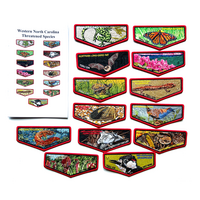
Western North Carolina Threatened Species
Revision History
There have been 2 revisions. Last change was update on 06 Aug 2026 by Henry Birdsong
Is this information incorrect?
File a report and help us improve.
All Catalog Entries
This issue exists in the following catalogs:
-
PatchVault
Tsali (134A) S199